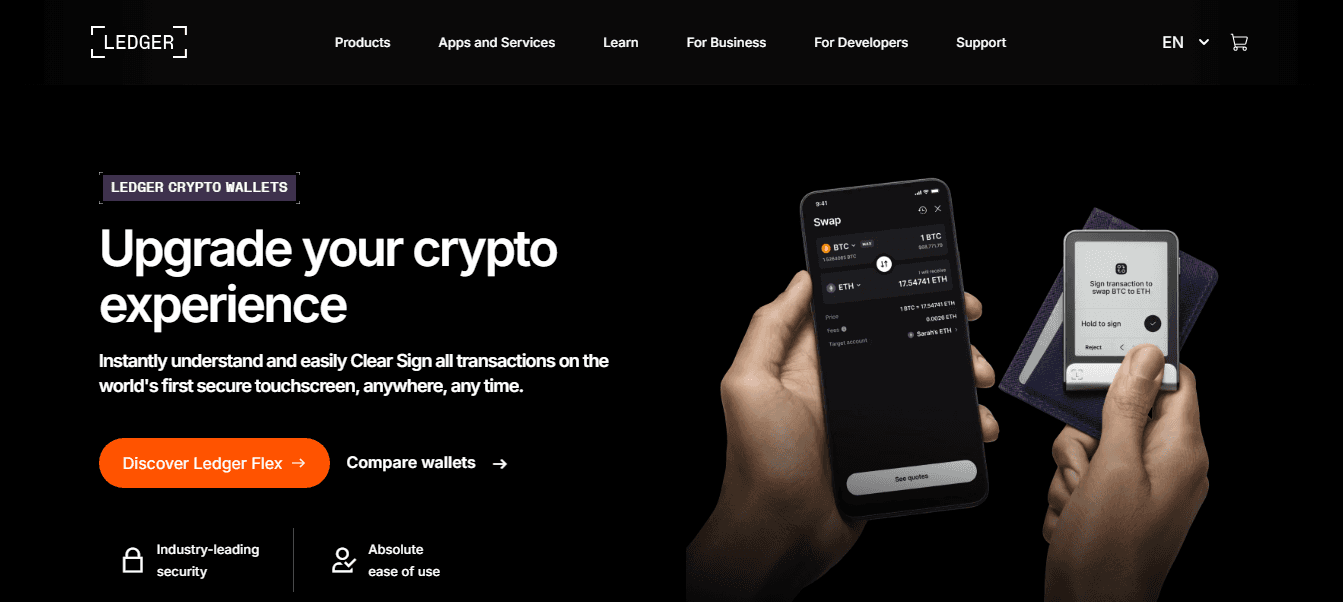
Ledger Live: A Complete and Updated 1200-Word Breakdown
Ledger Live is an all-in-one software platform designed to help people organize, monitor, and interact with their digital assets in a secure and streamlined way. It connects directly to Ledger hardware wallets, which are physical devices known for keeping private keys offline. While the hardware wallet handles protection, Ledger Live focuses on convenience and usability. Together, they create a system where users can manage their assets confidently without sacrificing security.
Below is an in-depth look at how Ledger Live works, what features it provides, and why it’s widely used by people who want an organized way to manage cryptocurrencies and tokens.
Purpose of Ledger Live
The main goal of Ledger Live is to give users a central place where they can manage numerous blockchains without needing multiple apps or web platforms. It brings balances, accounts, portfolios, assets, and certain network interactions together in one clean interface.
Even though the app handles these tasks, it never stores private keys or recovery phrases. Those stay inside the hardware wallet. Ledger Live acts more like a secure viewer and controller, while the hardware device acts as the actual vault.
Core Structure and Layout
Ledger Live uses a layout that prioritizes clarity. Its sections are arranged so users can navigate smoothly without having to search for essential tools.
Dashboard
When users open Ledger Live, the first thing they see is the dashboard. It displays:
Total portfolio value
Asset distribution
Recent activities
Performance changes
This high-level view helps people understand overall portfolio health instantly.
Accounts Section
Digital assets managed through Ledger Live are grouped into accounts. Each account corresponds to a specific blockchain. For example, Bitcoin has its own account, Ethereum has its own, and so on. Within each account, users can check balances, study transaction history, and access network-related functions.
Manager Section
The Manager is where users install or update apps on their Ledger hardware device. Cryptocurrencies typically require dedicated apps, so this section handles:
Installing apps
Removing apps
Checking device storage
Updating firmware
This integration ensures that hardware management and software management happen seamlessly in one place.
Discover Section
The Discover area includes additional services, educational tools, blockchain explorers, and integrations that can expand what users can do without leaving Ledger Live.
Compatibility and Supported Assets
Ledger Live supports an extensive range of cryptocurrencies and tokens. From major networks to ecosystem-specific tokens, the app can read balances, display market movements, and handle transactions for thousands of supported assets.
Some assets work entirely within Ledger Live, whereas others require external interfaces for advanced activities. Even when outside tools are needed, Ledger Live continues to provide oversight and requires hardware confirmation for any action involving private keys.
How Ledger Live Works With Hardware Wallets
Ledger Live does not directly control private keys. Instead, it communicates with Ledger hardware devices through a secure connection. Every sensitive action—including sending funds or approving smart-contract interactions—must be confirmed physically on the hardware device.
This system brings three major benefits:
Isolation: Private keys never touch online environments.
Integrity: Transactions shown on the hardware screen cannot be altered by malware.
Control: Only someone with physical access to the device can approve actions.
Even if a computer is compromised, the attacker cannot extract private keys or send unauthorized transactions as long as the user does not confirm anything on the hardware device.
Receiving and Sending Digital Assets
Receiving
To receive cryptocurrency, users generate an address through Ledger Live. The app then prompts them to verify the address on their hardware wallet. This step is crucial because it ensures the address shown on the computer matches the one generated by the secure device.
Sending
Sending requires entering the destination address and amount in Ledger Live. The app prepares the transaction, but nothing is broadcast until the user confirms it on the hardware device. This prevents unwanted transfers and ensures full visibility.
Portfolio Tracking Features
Ledger Live includes a portfolio tracker that shows financial performance across multiple timeframes. Charts and analytics display movements of individual assets and the overall portfolio. This helps users understand long-term trends without relying on extra market apps.
Users can view:
Daily, weekly, monthly changes
Individual asset pricing
Distribution of holdings
Historic trends
The tracker emphasizes transparency so users can see how their digital assets evolve.
Privacy and Security Features Inside the App
While the hardware device handles private-key protection, Ledger Live includes its own security options for everyday privacy:
App-level password lock
Local encryption of sensitive data
Adjustable privacy modes
Options to hide balances in public environments
These features make Ledger Live comfortable to use even on a shared or frequently-accessed computer.
Customization and Personal Settings
Ledger Live provides customization options to suit different preferences. Users can change themes, adjust notification settings, organize accounts, and modify how much information is displayed on the dashboard.
Advanced users can also use expert settings that allow deeper control over network parameters, though these are optional so beginners aren’t overwhelmed.
Updates and Continuous Improvements
Ledger Live receives consistent updates to expand features, add support for new networks, improve user experience, and reinforce security. Because the digital-asset ecosystem evolves quickly, updates ensure compatibility with new technologies.
These updates often include:
New coins and token standards
Interface improvements
Performance enhancements
Stability fixes
Hardware communication improvements
By staying updated, Ledger Live remains a reliable management tool over time.
Staking and Network Participation
Some versions of Ledger Live offer staking options for specific networks. Staking allows users to help secure certain blockchains by locking their assets for a period of time. The details vary by network, and users should understand how each system works before participating.
Ledger Live’s staking integrations aim to simplify the process by presenting everything in a clean interface. Hardware confirmation ensures that the user remains in control even during staking operations.
Why Ledger Live Is Trusted by Many Users
Ledger Live has become a widely used management platform for several reasons:
Security Model: It relies on hardware approval for every sensitive action.
Ease of Use: The app is built to be simple for beginners yet detailed enough for advanced users.
Unified Management: Users can manage multiple blockchains without juggling several tools.
Broad Asset Support: Thousands of digital assets can be tracked and organized.
Transparent Workflow: Everything is user-verified, visible, and protected by physical confirmation.
Regular Updates: Improvements ensure long-term reliability and relevance.
This combination of convenience and strong protection has helped Ledger Live remain a cornerstone tool for many people in the digital-asset world.
Overall Summary
Ledger Live acts as a control center for digital-asset management. It connects smoothly with Ledger hardware wallets, giving users a secure yet user-friendly system for organizing their assets. From sending and receiving to tracking, staking, managing apps, and customizing the platform, Ledger Live offers a structured and efficient environment.
Its balance of simplicity, wide asset coverage, hardware-level security, and continuous updates makes it a reliable option for anyone looking for a safe and organized way to manage digital assets.